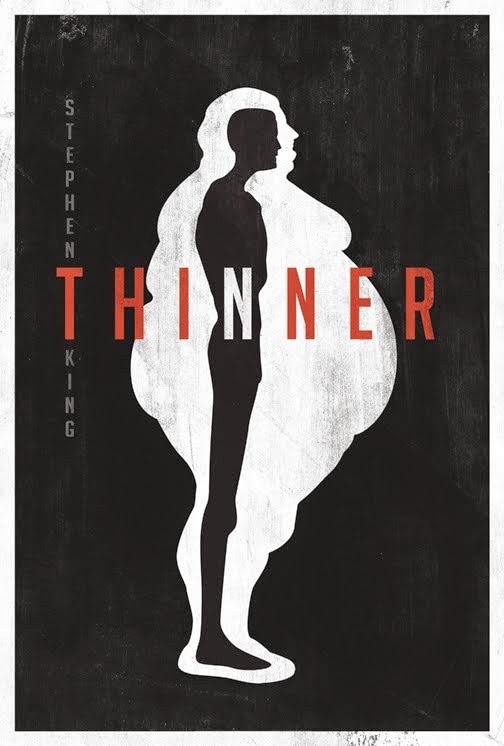
Stephen King

Stephen King

Long Walk / Thinner

The Long Walk: In the near future, where America has become a police state, one hundred boys are selected to enter an annual contest where the winner will be awarded whatever he wants for the rest of his life. The game is simple - maintain a steady pace of four miles per hour without stopping. Three warnings, and you're shot to death.
Thinner: Billy Halleck commits vehicular homicide when his lack of attention to driving results in the death of an old lady on the street. Overweigh Halleck is a lawyer with connections, though, and gets off with a slap on the wrist. After his trial, a gypsy curses him with a single word, "Thinner." Halleck begins to lose weight uncontrollably and must pursue the band of gypsies who are responsible for his dwindling condition.


Wednesday, January 14, 2015

Chapter 20- Quote Analysis

  For a moment he only stood there looking toward the sound of the ocean, which was very clear in the stillness.
    'You really ought to get off whatever hunger strike you are on, Mr Halleck,' he said without turning around. 'In many ways the world is nothing but a pile of shit. But it can also be very beautiful.

Billy cannot tell anyone outright about what has happened to him, because he would sound insane. It must be excruciating not to tell anyone, and throughout this chapter, Fander probably thought Bill was just obsessively trying to lose weight, but in retrospect, he is attempting to reverse a curse, which obviously, doesn't sound sane. This quote was relatively depressing, because Bill is trying all he can to not die from this, and someone just assumes that he does want to kill himself. 


Chapter 11

In chapter 11 it is reveled that Leda Rossington's husband, Cary. Instead of losing weight though, he's growing scales and turning into a reptile. I find this surprising...I didn't realize that the gypsies would go after other people in the case. I thought it would just be Billy, because he was the direct cause of the death.

Do you guys think that there may be other people involved in the case that have been cursed?
Do you think that the gypsies would take off the curse if they hunted them down?

I feel like I would be freaking out if I was cursed, but I feel like Billy isn't freaking out as much as he should have.

Tuesday, January 13, 2015

Similarities Between Billy Halleck and Cary Rossington

In chapter 11, Leda Rossington reveals that her husband, Cary Rossington, was also cursed by a gypsy, since he ensured that Billy Halleck wasn't punished for his crime. Instead of losing weight though, he's growing scales and turning into a reptile.
As Leda told the story of how Cary handled the situation I noticed a lot of similarities to the way that Billy handled being cursed by the gypsy. They both went through a stage of self-denial before eventually displaying self-awakening and recognizing what was going on.
At first, Billy refused to admit that he had been cursed by a gypsy, so he forced himself to think he had gotten cancer. Similarly, Cary Rossington believed that skin cancer was what was causing the scales on his skin to grow. He said to Leda, "This is skin cancer, skin cancer, skin cancer! Now will you for Christ's sweet sake shut up about that old wog!" (by the old wag he meant the gypsy who had cursed him). Then later on, both Halleck and Rossington started to come to terms with the fact that it was really the gypsies who were causing their situation. Both of their conditions are getting worse by the day so I'm interested to see what they're gonna do next. My guess is eventually they're going to try to track down the gypsy who cursed them.

The gypsy from the Thinner movie

Is Billy really to blame?

In the beginning of the book, Billy is consumed by his guilt for killing an innocent woman. He thinks about the accident constantly and it soon takes over his every thought. As the book progresses, Billy seems to feel less guilt about the incident and starts to think that his wife is responsible. He tells Hopley, "It was my wife's fault; because of what she was doing to me" (Chapter 12). Billy hit and killed the old gypsy woman with his car while his wife was giving him a hand job. He also goes on to blame the old gypsy woman claiming that "She came out from between two parked cars, didn't look either way. They teach you better in third grade" (Chapter 12). I find it confusing that Billy can go from being consumed by his guilt to blaming everyone else involved besides himself. I was reading this article about psychology and how people tend to deal with guilt and it reminded me of Billy. According to Mother Me, (excuse the weird name, it's actually a pretty interesting article) the first stage of guilt is feeling apologetic. Billy was definitely apologetic in the beginning of the book. He was not only haunted by the memory of the gypsy woman, but he felt guilty for putting his family in a bad position. He had given his family a bad reputation and Linda was ostracized at school. He tells Linda, "I heard you've been getting some pretty rough handling from the other kids. I'm sorry about that" (Chapter 1). Billy was enduring the first stage of guilt with his apologetic mindset toward everyone. But by chapter 12 he has transitioned to a combination of stage 2 and 3: defensiveness and the tendency to make excuses. He blames the gypsy and his wife and refuses to believe that he is responsible. The next step is absentmindedness, which I can envision Billy doing. He will probably try to suppress his memories of the incident by binge eating. Do you think Billy should be blamed for the accident? Or is his redirecting of the blame toward others justified?

Effects of the Curse on Billy

Aside from the physical effect of losing weight, I noticed that the curse is changing Billy a lot as a person. He seems really pissed off about his situation, especially since the weight loss is starting to occur at a faster rate, and its reflecting in his personality. He's now a more angry and hateful person then he was before he was cursed. He has an overall negative outlook and says that nobody is complimenting him on weight loss anymore and he's sure everyone is talking about him behind his back. He thinks everyone believes he has cancer or some sort of disease and the problem with his pants falling down in court only made him angrier.
He even starts to hate Heidi and he continues to avoid telling her what is truly causing his weight loss, mainly because he feels she's party responsible for his situation. 
I think that because Billy is mad about the fact that he's been cursed by the gypsy, he wants to blame it on somebody else; so he chooses Heidi. It says, "For one moment . . . he felt a sudden savage moment of hate for her" (75). He knows that is Heidi wasn't giving him a handjob and distracting him for driving he wouldn't have hit the gypsy. It explicitly says that Billy thought, "If Heidi hadn't picked that day to try out a little auto eroticism, Halleck would have been on top of his job and his responsibility as the operator of a motor vehicle, and {they}would have stopped at least five feet from the gypsy woman" (77). Even though I think Halleck accepts part of the responsibility, I think he's trying to dump the blame of Heidi so he can say its somebody else's fault. He didn't do anything to stop her in the car, so its also his fault.
Overall, you can see that the curse is taking a toll on Billy and he's becoming a lot more negative and he's assuming the worst. 

Monday, January 12, 2015

Chapter 10

I do not really understand Leda's toward Billy. She seems to hate the fact that Billy hit the gypsy with the car, and she is trying to prevent him from speaking to Cary. But it also doesn't seem as important as he makes it out to be to speak to him. Leda is also a bit sketchy as well, instead of laughing about him having a curse from a gypsy, she simply keeps pressing information from him and becomes upset.

Sunday, January 11, 2015

What is King Saying About Society?

I feel like Thinner is intended to be satirical. He depicts each character in an equally unlikable way. Most authors present the protagonist as a likable character who the readers tend to root for. However, Billy is selfish and pretty disgusting. His top priority seems to be food. Every other sentence is about some different food Billy is eating. "During his commute home on Tuesday, he pulled off the Connecticut Turnpike at Norwalk and picked up a couple of Whoppers with cheese at the Burger King there. He began eating them the way he always ate when he was driving, just working his way through them, mashing them up, swallowing them down bite by bite" (Chapter 5). Billy obviously has an eating problem and he lives in a constant cycle of saying that he will stop eating junk food but never does so. King presents Billy as a character who has no control over his excessive eating and is the stereotypical American. Americans are often associated with being fat and loving fast food and Billy perfectly embodies that stereotype. His wife, Heidi, is the typical house wife. She cooks, cleans, and waits on her man's every need. And their daughter, Linda, is the typical teenage girl who cheers and struggles with all that high school drama. King gives this average family a twist by having the father hit and kill an old gypsy with his car. Why do you think King creates the stereotypical American family? Do you think he is being satirical and criticizing society?

Chapters 6-7: Meeting With Doctor Houston

In these chapters, Billy Halleck met with Doctor Houston to discuss his weight loss. Through blood testing, the Doctor was able to confirm that Billy did not have cancer like he thought he did. Houston couldn't find any reason that could have caused the loss. Instead of being worried over this, however, he just said that things happen that he can't explain all the time. He tells him a story about a boy who had almost no brain whatsoever, but was still top of his class at George Washington University, and another story about an 88 year old woman growing a third set of teeth, and tries to relate Halleck's situation to theirs.
I would think that a Doctor should be more concerned if someone as overweight as Billy just randomly lost a lot of weight without trying to. The Doctor really didn't seem to care about anything though; he even offered Billy cocaine which seems really strange for a Doctor of all people to do.
Before leaving, Billy says, "You don't know why I'm losing weight." Houston says "Nope," sounding "pleased by the fact" (60). He says that sometimes he just gives people a diet to lose a few pounds, but they end up losing a lot more than that and that's probably similar to what happened to Billy (61).
I guess I can't blame Doctor Houston for not being able to diagnose that Halleck was cursed by a Gypsy, but I at least think he should have cared more. 
Billy claimed that the meeting made him feel so much better, but all of chapter 7 is just Billy having a nightmare involving Houston as a skeleton chasing him, trying to offer him the toot-sweet he did at their meeting, so clearly he's still worried after the meeting.
Houston also claimed that Billy's weight loss was going to start tapering off, but we know that that's not going to happen.

Thursday, January 8, 2015

Thinner- Chapter 1

From what I gathered, Bill Halleck got away with manslaughter, but the person he hit was an old gypsy woman, and someone (a gypsy) tried to tack revenge on him. He seems to try to block out his problems, and he's a little strange when it comes to describing Linda. I'm not really too sure as to what is happening to her. Is she being made fun of because her father killed an old woman?

Thinner: First Thoughts


Okay Stephen King is so strange. 
The first 5 chapters of this book are very disturbing. The words he uses to describe the story are so real and adult like. I think that because this story is in an adult's perspective, it's going to seem more mature and less scattered. 
I feel like the Long Walk was less plot and more depth and this story has more of a plot line. 
One thing I'm wondering, is Billy going to try and find the gypsies that cursed him? Or is he just going to deal with it? 
Right now it's unclear how Billy is going to handle this situation, and I'm curious to see what he is going to do. 
What do you guys think? 

Wednesday, January 7, 2015

First Reading of Thinner: Chapters 1-5

So far, I really like 'Thinner." I think that in comparison to the Long Walk, its a lot more detailed and descriptive and more adult-oriented. I think its different that the protagonist is an older guy with a child because in almost all books I've read, the protagonist is either a teenager or a young adult. 
By the end of chapter 5, Billy Halleck starts to accept the fact that he's been cursed by the gypsy man after he killed the gypsy woman by hitting her with his car. Billy believes that the man cursed him with cancer, and that's whats causing his rapid weight loss. He thinks to himself "Cancer, sure, you bet that's it. He cursed me somehow . . . Could cancer be eating into my guts right now, eating me inside, the way his nose . . . ?" (41). I don't think he's right about having cancer, but he's definitely has been cursed somehow; within the first 5 chapters alone he's already lost more than 20 pounds.
I also think that's it weird that Billy refuses to share his ideas about the reasons behind his weight loss with his wife. Shes very confused and worried about him and she insists that the weight loss couldn't have simply come from exercise. Billy never tells her, though, that he's sure hes been cursed. She's forcing him to make an appointment with Doctor Houston, so I'm interested to see how he's going to react to Billy's condition and what he's going to say caused it.
I think that this is only the beginning of Billy's weight loss. The chapter's are named after Billy's weight, and the number continues to go down. Chapter 1 is named "248", while Chapter 5 is named "221". I think the numbers are going to keep going down until they are dangerously low.   

Billy Halleck from the "Thinner" movie:


First Thoughts on Chapters 1-5 of Thinner by Stephen King

Although I find the book to be a little odd and disturbingly specific so far, I think the plot is very interesting and cool. It has not been directly stated, but the reader can imply that the main character, Billy, accidentally hit and killed an elder woman with his car. He obviously is haunted by the accident as he has constant flashbacks of the day it all happened. Billy describes the woman as this odd, gypsy type. Afterward, he recalls a gypsy man approaching him and telling him that he is cursed for killing the old woman.

Billy has been exempt from his charges due to the connections he has with the people of the town court. He seems to pretend like he is fine and happy but is actually the exact opposite. The same goes for the rest of his family. His daughter, Linda, is the talk of her school after her father killed an old lady. Linda maintains her daily routine of cheer and school but her father's accident has isolated her from her peers. Billy's wife, Heidi, seems the best at concealing her true emotions. Billy says that she is all smiles for the family but she smokes a pack and a half everyday to calm herself. The one time that Heidi isn't smiling, Billy "imagined her wearing a sign: MY SMILER IS TEMPORARILY OUT OF ORDER" (2). This is pretty sad but reveals how robotic and fake Heidi's happiness is. Lastly, Billy acts like he is fine but is still tormented by the guilt. He constantly recalls hitting the old woman, even during sex with his wife, the gypsy lady is all he can think about. Additionally, he is constantly badgered by his wife and "friends" about his weight. He is insecure about his weight, constantly sucking in his gut. It doesn't help that his friends are always pointing out that he is overweight. But when his client asks him if he is okay, he replies "I'm so okay you wouldn't believe it" (3). Based on his thoughts, the statement appears to be a lie. Each of these characters are struggling but cover up their unhappiness. My prediction is that the characters will start to fall apart and their true feelings will be revealed. It reminds me a little of Long Day's Journey into Night (#throwback) because each member of the family had their own personal issues that ended up dividing the family.

The posts from this point on will be about Thinner since we have finished the Long Walk (just to clarify for Kindel).

Tuesday, January 6, 2015

The People

The spectators during the Long Walk were ruthless. Like McVries had said, it was just kind of like entertainkment to them as compared to the reality which was 99 of these boys were going to be shot dead. They cheered as if it was football game of some sort

The Point

I know there is a prize at the end of The Walk, but overall, what is the point of having 100 boys walk till they drop? Is there a specific purpose, besides the prize?

Photo

I thought Garraty was a zombie at first, but I think that is what the artist is trying to portray.

The Ending

The ending was trivial because Garraty seems as though he's going to give up, but he is the main character, so that cannot necessarily happen. I think Stebbins has something to do with Garraty's continuing, as do all of the rest of the boys. He might feel as though he has to continue walking for all of them/. You can especially see this when he is talking, or reciting each of their names. But I would also like to know if he won or not. And what happens when both Walkers finish without dying.

Chapter 17

It was to be inferred that Stebbins had a connection with knowing so much about the Long Walk, and it was not particularly too surprising to learn that he was the Major's son. But I was not sure whether or not Stebbins was trained by the Major or if he had any special advantages that the Msjor gave him, like he didn't have to die?

Stebbins

Stebbins seems like knows what he's doing, and has remained fairly consistent throughout the story so far. Garraty is annoyed, and sometimes scared by, He has a good technique going, but I think it's mostly mental rather than physical. He also far-fetched philosophies that seem to pertain exactly to the situation. When he is talking to Garraty about Olson, he says, "'But suppose you told the housewife; today you must walk sixteen miles before you can have your supper.' Garraty nodded, 'She'd be exhausted instead of tired.' Stebbins said nothing. Garraty had the perverse feeling that Stebbins was disappointed in him." He also seems to enjoy these riddles, that make Garraty think.

Sunday, January 4, 2015

The Ending

We all agree that the book had a very abrupt ending. It seemed like there should be more to the story. However, as I was thinking about it more, I think that the ending fits the story. The story itself is the entirety of this competetion. As soon as Ray is the last one standing, the Walk is over, and therefore, the story is over. 
Of course, the inner me is always looking for some closure, and a happy ending where Ray gives the prize to his family or he becomes a famous person in their society... but I also kind of like the idea of just leaving the ending at the finish line. 
Stephen King leaves the ending for interpretation. 
The way I saw it was that Garraty had become consumed by the Walk that by the time he won it, he couldn't stop. The rules had become his reality. 
In the last chapter i t says, "Stebbins was dead. But Ray lost interest. He just kept walking."
It was interesting to me that he kept on walking even though he has clearly won the Walk. And then as he kept walking he said, "There was a jeep roaring up ahead. No vehicals on the road you damn fool. That's a capital offense, they can shoot you for that."   I found this so weird. The Walk brainwashed him. Did you guys notice this? What are your thoughts?